


🧠 Food for Thought - The Top Shot: John Wick Chapter 4.
- John Maurice Otieno
- Jun 24
- 3 min read
Updated: Jun 25
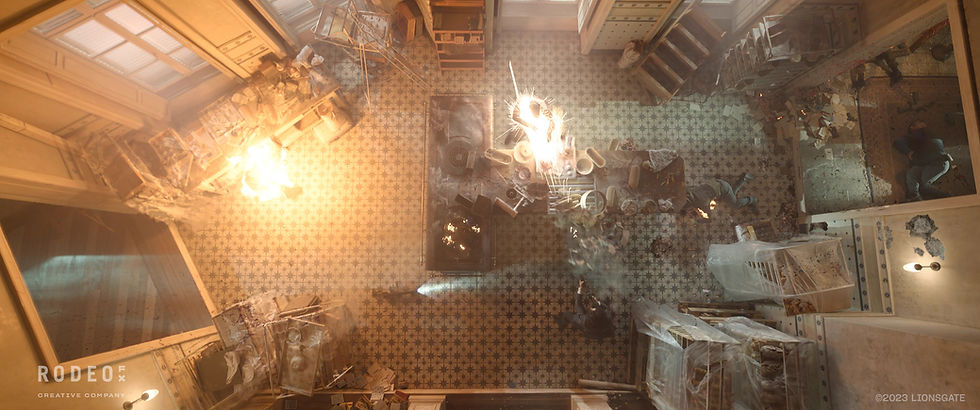
You know how sometimes you can find yourself standing on the balcony of a tall building, taking in all the action directly underneath? No? Maybe this POV leaves you frantic.
That's why this top shot in filmmaking is called - among other names - the vertigo shot, but it can do more than just highlight anxiety in horror/thriller flicks. In action movies, the shot can present wide continuous scenery of immersive action choreography as well as visually stunning aesthetics.
In John Wick's 4th big-screen adventure, director Chad Stahelski pulls off the feat in one of the most iconic action scenes to date, but why'd he even opt for the top shot at all? Let's get into it. As always, spoiler alert! And remember, details matter.

What is the Top Shot?
As per pixflow, the top shot is taken by a camera pointed directly down at the subject from above. Typically shot from 90 degrees above. Anything less might be considered a high angle shot instead.
The top shot is also referred to as the overhead shot or bird's-eye view.

The Top Shot in John Wick: Chapter 4.
Overhead shots tend to give the viewer an abnormal perspective and ergo run the risk of pulling the audience out of the movie. However, when deployed correctly, they can be immersive and make for brilliant cinematography.
When John's cornered by bounty-hunting assassins on his way to a duel to the death at the Sacré-Cœur Church, he pivots into an abandoned building where the enticing top-down scene plays out, highlighting the following key components of masterful filmmaking:

1. Immersive Long Takes.
Stahelski uses eye-catching long takes throughout the John Wick franchise and the overhead scene in the 4th installment is no exception. The scene runs for about two and a half minutes and captures your attention for every last second. The upbeat EDM sets the tempo as John traverses room to room seamlessly, kicking ass gun-fu style and launching Dragon's Breath fire at his adversaries.
Studiobinder asserts the bird's-eye-view shot as one ideal for showcasing complex movements. The gun fu choreography below us takes on a different light from the overhead angle, tickling our intrigue and immersing us into the fight scene.
There's also aesthetic appeal to be found from this bird’s eye angle. Tell me you aren't in awe as Dragon's Breath ammo literally lights up the room below us.
2. Point of View.
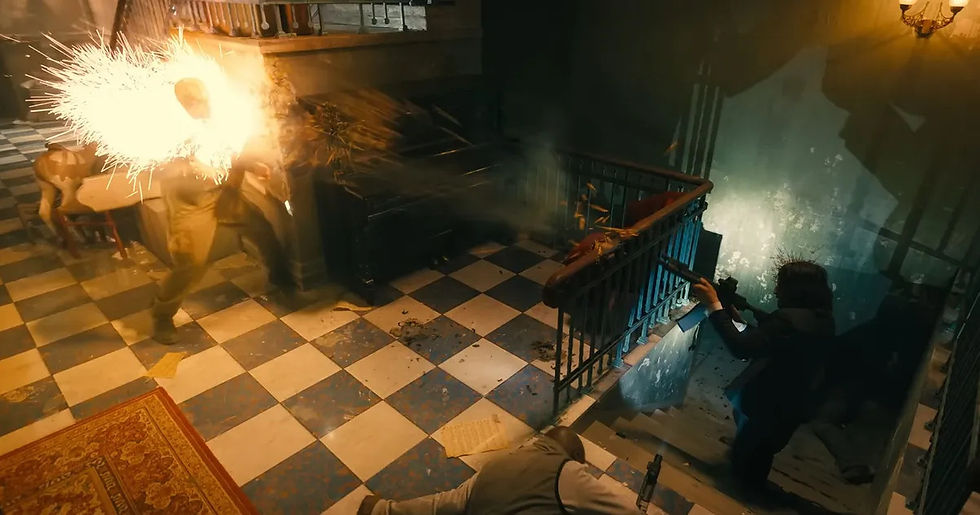
The top shot gives the viewer a unique perspective as if they are looking down on the scene from overhead. You know how people say, "I wish I were a fly on the wall"? In John Wick: Chapter 4, watching this scene gives you that feeling, but instead of a fly, you're a perching bird, watching it all unfold directly beneath you.
The top-down perspective also unveils details not visible from a horizontal viewing angle, revealing hidden information. When the mercs shoot at John through the walls, we see their precise movements and know exactly where they are at every beat. From a horizontal POV, we'd have to guess.

3. Seamless Transition.
The overhead vantage point is also effective for revealing spatial relationships between visual elements that aren’t as clear from eye-level.
As John traverses the building, we track him smoothly from room to room, without any disruptions. Had the scene been shot from the ground, we'd have to cut from shot to shot every time John switched rooms and fighting stances.

The Nutshell.
In a nutshell, the top shot is a beautiful piece of cinematic artistry that when used well can give birth to truly masterful cinematography. When you go back to re-watch this iconic scene in John Wick, pay attention to how Stahelski first widens the shot, before gradually pulling up and high in a clockwise manner as he immerses you effortlessly into the iconic overhead shot.

Are you a fan of the top shot? Can you think of a film that did it better? Food for thought 🧠


Comments